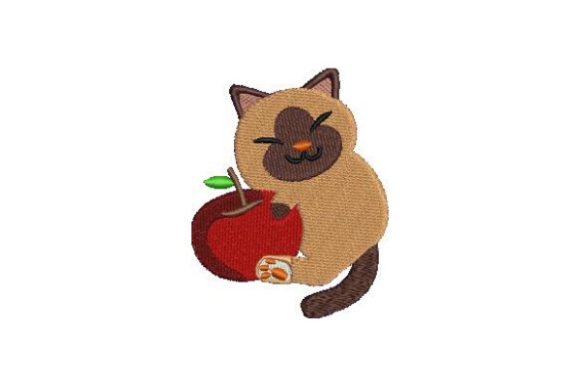
Cat Hugging Apple: A Craft Fair-Ready Embroidery Design
First Impression: Sweet, Playful, and Instantly Recognizable
As an embroidery designer who’s curated over 200 craft fair booths—and shipped thousands of finished products to Etsy sellers and boutique makers—I can tell you Cat Hugging Apple lands with quiet charm. It’s not loud or trendy in a fleeting way. Instead, it reads as soft-cute with gentle whimsy—think modern farmhouse meets handmade storybook. The title alone sparks curiosity and warmth: no ambiguity, no forced puns, just a clear, affectionate image that resonates across age groups and aesthetics. That matters immensely when your booth has three seconds to capture attention.
Where Cat Hugging Apple Shines on Real Craft Fair Products
This machine embroidery design performs exceptionally well across high-visibility, high-margin items—especially those customers touch, hold, and photograph. On a natural linen tote bag design, the cat’s rounded silhouette and apple’s smooth curve read cleanly at arm’s length. As apron embroidery, it sits perfectly centered above the pocket—friendly without overwhelming utility. For tea towel embroidery, it holds up beautifully on medium-weight cotton terry: the stitch density appears balanced, and the shape avoids excessive fill that might stiffen the fabric.
It’s also ideal for embroidered patch production. Cut-and-sew patches made from this design retain legibility even at 3.5”, making them perfect for denim jackets, kids’ backpacks, or gift tags. On curved surfaces like caps? Proceed with caution—test first. The apple’s stem and cat’s ear detail may compress or distort unless digitized with cap-friendly underlay and reduced density. Likewise, avoid placing Cat Hugging Apple too close to seams or hems on pillow covers or small pouches; its gentle curves benefit from breathing room.
Photography, Listings, and Online Appeal
If you’re an Etsy seller or digital embroidery file creator, know this: Cat Hugging Apple photographs with exceptional clarity. Its contrast-rich outline (assuming standard thread colors) pops against light and mid-tone fabrics—ideal for clean printable mockup use. It translates well into lifestyle shots: imagine it stitched on a canvas market bag beside fresh apples and wildflowers. That visual cohesion helps build brand consistency across your shop banner, product grid, and social posts.
It also supports repeatable batch production. Unlike intricate floral monograms or dense mandalas, this digital embroidery file avoids micro-details that snag threads or demand constant machine monitoring. No tiny lettering. No nested inner layers. That means fewer stops, less thread breakage, and smoother runs across 50+ tote bags before the fair opens.
Practical Considerations Before You Stitch
Every experienced embroiderer knows: a beautiful design on screen isn’t guaranteed on fabric. Here’s what to verify before cutting your first yard:
- Test on scrap fabric—especially if using textured towels, dark denim, or quilt-weight cotton. The cat’s facial features rely on subtle satin-stitch shaping; heavy texture can blur definition.
- Check thread contrast. Light gray cat + red apple works on ivory linen—but may vanish on heather charcoal. Keep a swatch log of thread/fabric combos that deliver crispness.
- Review spacing and hoop size. If the design pushes near the 5x7” limit, confirm your smallest hoop accommodates it comfortably—no trimming corners or risking misalignment on small pouches.
- Inspect stitch density. Overly dense fills cause puckering on lightweight cotton. If your version feels heavy, reduce fill percentage by 5–8% and retest.
- Use the right stabilizer. Tear-away works for stable wovens; cut-away is safer for knits or stretchy apron fabrics. Skip fusible web unless you’re heat-setting patches—adhesive residue can gum needles.
Design Assets That Elevate Your Handmade Product Line
Cat Hugging Apple isn’t just a standalone motif—it’s a versatile design asset. Pair it with minimalist apple-green or warm terracotta thread for cohesive collections. Bundle it with coordinating “Apple Core” or “Paw Print” accents for themed kits. As a small shop product, it adds personality without sacrificing sophistication—unlike cartoonish motifs that date quickly or overly literal designs that feel gimmicky.
In your booth display, use it across three tactile formats: a stitched tea towel draped over a wooden crate, a leather patch pinned to a burlap banner, and a single embroidered pillow propped beside real apples. That multi-surface repetition builds subconscious recognition—customers remember how the design *feels*, not just how it looks.
Commercial Use & Licensing Notes
Before selling finished products—whether as physical craft fair product or digital embroidery file—confirm commercial licensing terms. The description states, “This machine embroidery design will stitch out beautifully with your embroidery machine”—but doesn’t specify usage rights. Always verify whether resale of physical items is permitted, and whether derivative designs (e.g., adding text or combining with other motifs) are allowed. When in doubt, contact the original designer or marketplace vendor directly. Skipping this step risks takedowns—or worse, damaging relationships with wholesale partners.
Final Thoughts for Creative Entrepreneurs
Cat Hugging Apple earns its place in your active design rotation because it balances emotional appeal with production practicality. It invites smiles without leaning into kitsch. It scales well—from 2” patches to 7” tote centerpieces. And most importantly, it supports your identity as a maker who values both craftsmanship and customer connection.
For handmade product sellers, this design quietly elevates perceived value: a $28 embroidered tea towel feels more intentional, more giftable, more *designed* than one with generic florals. For commercial embroidery businesses, it’s a reliable anchor in seasonal collections—equally at home in spring markets, fall harvest fairs, or year-round boutique inventory.
So go ahead—add Cat Hugging Apple to your next test run. Stitch it on two fabrics. Photograph it in natural light. Hold it beside your best-selling item. Then ask yourself: does it make your booth feel more inviting? Does it make your customer pause longer? If yes—you’ve got a keeper.