Mr Mr: A Quirky, Versatile Embroidery Design Worth Your Thread
First Impressions: Playful, Punchy, and Surprisingly Flexible
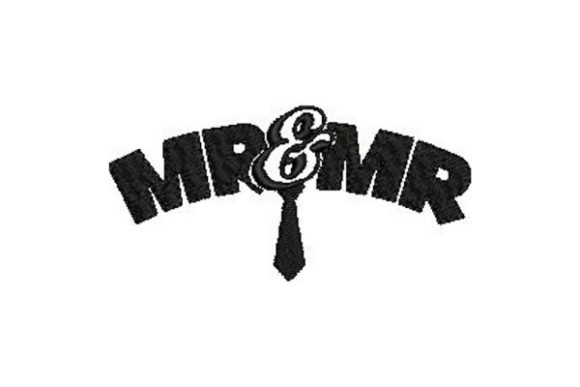
When I opened Mr Mr for the first time, I didn’t see just another “funny stitch”—I saw a design with quiet confidence. It’s compact but expressive, balancing clean lines with a wink of irreverence. The layout feels intentional: no overcrowded elements, no awkward spacing, no forced cuteness. As an embroidery designer who’s stitched hundreds of “bachelor-themed” pieces—from groomsmen aprons to beer-coaster patches—I immediately recognized how Mr Mr avoids cliché. It doesn’t lean on oversized fonts or cartoonish tropes. Instead, it uses rhythm, proportion, and subtle weight in the letterforms to land its tone: lighthearted but not silly, clever but not cryptic.
A Real-World Test: Stitching It on a Linen Tote for a Local Groom’s Pop-Up Shop
Last month, I used Mr Mr on a set of heavyweight natural linen totes for a small-batch wedding pop-up—think “groom-approved merch” for guests who’d rather sip whiskey than pose for photos. We hooped medium tear-away stabilizer, chose matte cotton thread in charcoal and oatmeal, and ran it at 75% speed on midweight twill-backed linen. The result? Crisp, legible, and quietly charming. No skipped stitches. No puckering. Even on the slightly uneven weave of the fabric, the satin stitch held its shape, and the fill areas stayed breathable—not plasticky or stiff. Customers didn’t just smile; they paused, read it aloud, then asked where to buy more. That’s the sign of a design that works *with* the product—not just on it.
Where Mr Mr Shines (and Where It Needs Thought)
Mr Mr is one of those rare machine embroidery designs that transitions effortlessly across categories:
- Custom apparel: Looks sharp on crewneck sweatshirts (left-chest placement), relaxed-fit tees (back yoke), and even structured caps—though I recommend testing on a curved cap hoop first, since tight curves can compress letter spacing.
- Handmade product and personalized gift: Works beautifully on baby onesies (use lightweight cut-away stabilizer), tea towels (opt for low-density fill stitch to preserve drape), and pillow covers (avoid dense satin borders if stuffing will compress the fabric).
- Etsy seller and small shop product: Its minimalist vibe reads well in printable mockups—especially against neutral backgrounds—and scales cleanly from 3” to 5” without losing clarity. That flexibility means fewer file variants to manage and faster listing updates.
- Commercial embroidery: Because it’s not overly detailed, Mr Mr runs reliably across most commercial hoops and machines—no risky underlay or excessive trims. That cuts down on re-hooping and thread breaks during batch production.
But let’s be real: no design is bulletproof. Mr Mr needs thoughtful pairing on:
- Thin or stretchy fabric: Skip lightweight jersey or slinky rayon unless you’re using heavy cut-away + topping—otherwise, the letters can distort.
- Dark fabric: The design relies on contrast. On navy or charcoal, test thread colors early—matte black thread on black fabric disappears. Go for cream, heather grey, or rust instead.
- Tiny hoop sizes (<4”): While scalable, shrinking Mr Mr below 2.5” risks blurring the internal spacing. If you need micro-placement (e.g., cuff or pocket), verify stitch density and running stitch integrity in your software preview.
- Layered or textured surfaces: Avoid stitching directly over seams, ribbing, or quilted sections—stabilizer won’t fully compensate for inconsistent fabric height.
What It Adds to Your Finished Product—Beyond the Stitch
As a designer who evaluates embroidery for brand impact, not just execution, Mr Mr delivers quiet value. It elevates a plain tote into a conversation starter. It softens the formality of a baby blanket without undermining its handmade warmth. It gives a boutique sweatshirt personality without shouting. That balance builds customer trust: people sense intention, not autopilot digitizing. For Etsy sellers, that translates to better photo engagement, fewer “Is this ironic?” questions, and stronger repeat appeal. And for craft business owners building cohesive design assets, Mr Mr fits neatly into a broader aesthetic—whether your brand leans rustic, modern-minimal, or dry-witted.
Practical Designer Notes Before You Stitch
Before adding Mr Mr to your next embroidery project, here’s what I do every time:
- Test on scrap fabric—same type, same stabilizer, same thread. Not just once. Twice: once at full size, once scaled to your smallest intended use.
- Check thread color contrast in both natural and artificial light. What reads bold at noon may vanish under café lighting.
- Review stitch density in your editing software. If fill areas look heavy, reduce density by 10–15%—especially for kitchen towels or baby items.
- Confirm hoop size compatibility. Don’t assume “multiple embroidery file formats” means all are optimized for your machine’s default hoop.
- Inspect small details manually—look for tiny jump stitches near corners, overlapping satin edges, or under-digitized curves.
- Test black-and-white mockups. If it holds up in monochrome, it’ll hold up anywhere.
- Use proper stabilizer: medium cut-away for knits, tear-away for stable wovens, and always topping for napped or textured fabrics.
- Verify licensing. Since this is marketed as a Bachelor-themed Embroidery design, confirm whether resale of finished products or digital redistribution is permitted—especially if you’re an Etsy seller or digital embroidery file reseller.
Mr Mr isn’t flashy—but that’s exactly why it lasts. In a market saturated with overdesigned, overdigitized embroidery, it’s a reminder that restraint, rhythm, and real-world usability still matter most. Whether you’re stitching a single personalized gift or prepping 50 tote bags for a craft fair, this design earns its place in your library—not because it’s loud, but because it’s right.