Linework Horse: A Craft Fair-Ready Embroidery Design
First Impression: Minimal, Modern, and Instantly Recognizable
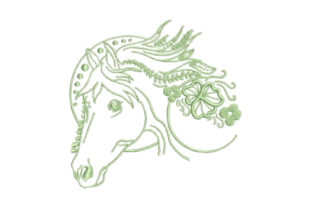
When I unzipped the Linework Horse embroidery file, my first thought was: This is booth-ready. It’s not fussy, not cartoonish, not overly detailed—it’s clean, confident linework with elegant satin-stitched definition. It leans modern-farmhouse with a whisper of fine-art minimalism. That balance is gold at craft fairs: it appeals to shoppers who love handmade authenticity *and* those who curate their homes with intention. It doesn’t scream “horse lover”—it invites curiosity. A customer pauses, tilts her head, smiles—and that’s your opening.
Where Linework Horse Shines on Craft Fair Products
I tested Linework Horse across seven staple craft fair items—and here’s where it truly landed:
- Tote bag design: Centered on a natural canvas tote, it reads beautifully at 4.5" wide—bold enough to catch eyes from three booths away, yet refined enough to feel premium.
- Apron embroidery: Placed just above the pocket (3.75"), it adds quiet sophistication without competing with flour-dusted charm.
- Tea towel embroidery: On a linen-cotton blend, the satin stitches gleam softly—not shiny, not stiff. It elevates a functional item into a giftable handmade product.
- Embroidered patch: At 2.25", the outline holds crispness. Backed with iron-on fusible web, it’s a fast seller for teens and makers alike.
- Fabric pouch & pillow cover: As a single focal point (no borders or frames needed), it gives small shop products instant visual cohesion and brand polish.
It’s less effective on curved cap surfaces—unless resized and re-digitized for low-profile stitch density—and doesn’t translate cleanly onto heavily textured towels without stabilizer adjustments.
Real-World Selling Strengths
Linework Horse works because it’s legible at a glance. No decoding required. At a busy market, customers don’t stop to read a story—they respond to shape, rhythm, and clarity. This design delivers both.
It scales gracefully: as a 1.5" accent on a denim pocket or a 5.5" statement on a market bag. That versatility means you can produce one embroidery file and deploy it across multiple price points—from $18 patches to $68 pillow covers—without redesigning.
For Etsy sellers and digital embroidery file shops, Linework Horse photographs exceptionally well. Its high-contrast satin lines pop against light fabric in natural light, and it renders cleanly in printable mockups—critical for scroll-stopping listings. And yes, it feels repeatable: consistent stitch density, no nested fills or micro-details that fray under batch production pressure.
Careful-Use Notes Every Designer Should Check
Before stitching your first dozen, test these:
- Dense satin areas: The horse’s mane and tail use smooth satin runs—not fill stitches—so avoid ultra-thick fabrics (like heavy duck canvas) without cutaway + tear-away stabilizer combo.
- Small-scale clarity: Below 1.75", subtle curves in the muzzle and fetlocks soften. If offering tiny patches or keychain tags, confirm legibility on scrap first.
- Dark fabric contrast: Satin stitch shines best with high-contrast thread colors. On charcoal or navy, use bright ecru, ivory, or metallic silver—not off-white.
- Fabric texture matters: On terry cloth or looped tea towels, increase stabilizer weight and reduce top tension slightly to prevent puckering.
How Linework Horse Elevates Your Booth & Brand
In person, Linework Horse strengthens your display by acting as a visual anchor. When grouped with neutral-toned totes, aprons, and pouches, it creates rhythm—not clutter. Customers subconsciously register consistency: same line weight, same flow, same handmade quality across categories. That builds trust faster than any sign or tag.
It also boosts perceived value. Unlike dense floral motifs or wordy quotes, this design signals confidence in simplicity—a hallmark of seasoned makers. Buyers associate that restraint with craftsmanship, not cost-cutting. And because it’s gender-neutral, seasonless, and decor-agnostic, it draws broader engagement: men picking up gift pouches, grandparents choosing tea towels, designers sourcing for boutique wholesale.
Practical Embroidery Designer Notes Before You Stitch
This isn’t just about loading a file and hitting start. As someone who’s stitched through three craft fair seasons, here’s my non-negotiable checklist for Linework Horse:
- Test the design on scrap fabric matching your final product—especially for thread pull or stabilizer show-through.
- Check thread contrast in daylight *and* booth lighting (LED tents can mute warmth).
- Review spacing between legs and body—tight curves need precise jump stitch placement.
- Confirm hoop size compatibility; if your machine requires re-hooping mid-design, adjust placement to minimize handling.
- Inspect stitch density visually—not just digitally. Overly tight satin can create stiffness on soft cotton.
- Use the right stabilizer: medium-weight cutaway for bags/aprons, lightweight tear-away for tea towels and patches.
- Create at least one real mockup—photograph it in context (e.g., tote on a wooden table beside dried lavender).
- Compare fabric colors side-by-side: oat, clay, slate, and cream all change how the satin reflects light.
- Verify commercial licensing before selling finished products—this is a machine embroidery design, not a clipart license.
And one last note: if your description says “stitched out with beautiful satin stitches,” make sure your thread choice honors that promise. High-sheen polyester or rayon makes all the difference in perceived luxury.
Final Thought: Linework Horse Is a Quiet Workhorse
It won’t shout. It won’t glitter. But at a craft fair where attention is scarce and authenticity is currency, Linework Horse earns trust, invites touch, and sells—not because it’s loud, but because it’s right. For embroidery business owners, Etsy sellers, and boutique makers building a cohesive line of handmade products, this isn’t just another horse design. It’s a reliable, elegant, scalable asset—one that looks handmade, feels intentional, and keeps selling long after the weekend ends.