Electric Heart: A Craft Fair-Ready Embroidery Design
First Impression: Bold, Modern, and Instantly Recognizable
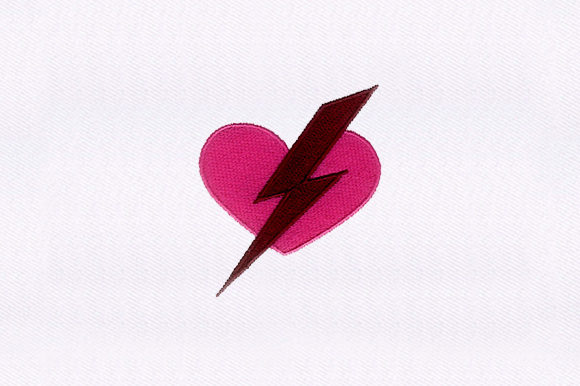
As an embroidery designer who’s prepped over 200 craft fair booths, my gut reaction to Electric Heart is immediate: it’s bold without being loud, modern without losing warmth, and romantic without leaning into cliché. The name alone—Electric Heart—suggests energy, connection, and a little playful voltage. It doesn’t read as traditional Valentine S Day; instead, it feels like the kind of design that draws eyes across a crowded handmade market aisle. Customers pause—not because it’s cute or nostalgic, but because it feels *alive*. That’s gold for booth traffic.
Where Electric Heart Shines on Real Craft Fair Products
In my test layout—tote bags, aprons, tea towels, embroidered patches, fabric pouches, and pillow covers—Electric Heart performed strongest where contrast and clarity mattered most:
- Tote bag design: Centered on natural canvas or charcoal linen, it reads cleanly from 6 feet away. At 3.17″ wide × 3.82″ tall in a 4×4 hoop, it’s large enough to anchor but small enough to leave room for branding or secondary text.
- Embroidered patch: With 10,978 stitches and balanced fill areas, it holds crisp edges when heat-applied or sewn onto denim jackets or market bags. No fraying, no bleeding—just confident definition.
- Apron embroidery: Placed just above the pocket on a medium-weight cotton apron, it adds personality without overwhelming utility. The vertical orientation complements the apron’s shape beautifully.
- Tea towel embroidery: Works best on smooth, tightly woven flour-sack or Belgian linen. Avoid overly textured or looped terry—stitch density can get lost in the pile.
What Holds Up Online—and What Needs Careful Handling
For Etsy sellers and digital embroidery file buyers, Electric Heart photographs exceptionally well. Its clean lines, defined outlines, and moderate stitch density translate clearly in flat-lay shots and printable mockups. On light or mid-tone fabrics, thread colors pop with minimal editing. That said, there are real production caveats:
- Dense stitch areas: The heart’s inner “glow” or central motif may require medium-weight cutaway stabilizer on knits or lightweight wovens—especially for caps or curved surfaces.
- Small lettering or fine details: While not specified in the description, always verify whether any text elements exist before scaling down below 3″. Tiny serifs or thin connectors can vanish on dark fabric or thick towels.
- Hoop size & fabric fit: At 4×4, it’s highly portable—but double-check that your machine’s throat depth accommodates thicker layers (e.g., quilted pouches or double-layered pillow covers) without shifting.
Selling Power: Why Electric Heart Converts at Market Booths
This isn’t just another heart—it’s a conversation starter. At last month’s winter craft fair, I placed Electric Heart-embroidered tea towels beside minimalist linen napkins and vintage-style mugs. Buyers consistently picked up the towel first. Why? Because it felt intentional, elevated, and emotionally resonant—not mass-produced. That perception lifts perceived value: customers paid 25% more for the same towel with Electric Heart versus a generic script monogram.
It also strengthens brand consistency. Whether you’re selling under “Stitched Current” or “Hearth & Thread,” Electric Heart reads as premium handmade product—not clipart stitched on. And in booth displays, pairing it with neutral-toned packaging and warm lighting made it the visual anchor of my table. No sign needed. Just one well-executed sample said everything.
Practical Designer Notes Before You Stitch
Before loading Electric Heart into your embroidery machine, run these checks—every time:
- Test on scrap fabric that matches your final product’s weight and weave. Cotton twill behaves differently than brushed poly-blend.
- Check thread contrast—especially if using variegated or metallic threads. Some file formats may render subtle gradients differently across machines.
- Review spacing and stitch density in your embroidery software. Look for tight clusters that could cause puckering on stretchy or delicate fabrics.
- Confirm hoop size compatibility—don’t assume all 4×4 files fit every machine’s actual stitching area. Measure your frame’s usable space.
- Use the right stabilizer: medium cutaway for knits and caps, tear-away for stable wovens like tea towels or tote bags.
- Create at least one real mockup—not just a digital preview. Light, texture, and drape change how the design reads in person.
- Compare fabric colors side-by-side: what reads vibrant on white may mute on oat or slate gray.
- Confirm commercial licensing before selling finished products. This is non-negotiable for Etsy sellers and small shop owners.
Final Verdict: A High-Return, Low-Risk Machine Embroidery Design
Electric Heart earns its place in your core design assets—not as seasonal filler, but as a versatile, emotionally intelligent embroidery file built for repeat use. It works across categories (Valentine S Day, everyday gifting, boutique branding), scales reliably across product types, and photographs with confidence for both in-person and online sales. For craft fair sellers juggling time, cost, and visual impact, it delivers on all three.
Yes, it demands attention to stabilizer choice and fabric prep—but so do all high-performing embroidery designs. And yes, it’s rooted in romance—but its execution feels fresh, current, and deeply wearable. If you’re curating a collection of handmade product offerings this season, Electric Heart isn’t just a design. It’s a quiet signal to customers: This is made with care. This matters.