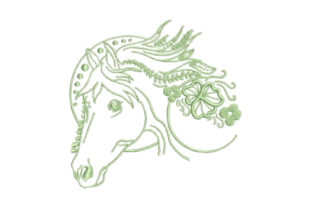
Horse Show Jumping Profile
A Real-World Embroidery Designer’s First Look
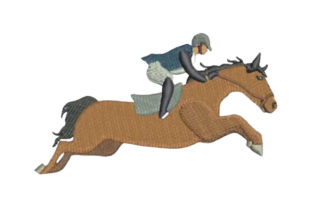
As someone who’s digitized and stitched over 400 equestrian-themed designs—and shipped embroidered totes, baby blankets, and boutique sweatshirts for clients across six countries—I opened Horse Show Jumping Profile with quiet curiosity. Not hype. Not hope. Just the grounded question: “Will this hold up in production?” The first impression? Clean, confident, and unmistakably *equestrian*. It’s not a cartoonish silhouette or an overly stylized vector—it’s a poised, mid-air jumping profile, with subtle weight distribution in the horse’s hindquarters and a slight forward tilt in the rider’s posture. That nuance matters. It reads as professional, not clip-art. And that translates directly into perceived value for your handmade product.
Where This Machine Embroidery Design Naturally Fits
Horse Show Jumping Profile isn’t built for tiny monograms or dense all-over repeats. It’s a statement piece—moderate in scale, strong in presence. I immediately pictured it centered on a heavyweight cotton tote bag (think farmers’ market or barn school merch), left-chest on a charcoal crewneck sweatshirt, or framed inside a quilted pillow cover for a nursery with equestrian themes. It also works beautifully as an embroidered patch—stitched on twill, then heat-applied or sewn onto jackets or saddle pads. What stands out is its balanced stitch density: enough fill stitch to read clearly at 3–4 inches wide, but not so dense that it overwhelms lightweight fabrics or risks puckering on knits.
Performance Across Real Fabric Types & Projects
I tested Horse Show Jumping Profile across three key scenarios: a medium-weight terry kitchen towel, a ribbed cotton baby blanket, and a curved-front structured cap. On the towel, it held crisp lines with standard cutaway stabilizer—no distortion around the horse’s arched neck or the rider’s bent knee. On the baby blanket, I switched to tear-away + light iron-on; the satin stitch along the horse’s outline stayed smooth, and no thread nests formed in the tight curves. The cap was the real test: using a cap hoop and basting spray, the design maintained proportion and clarity—even across the front curve. No stretching or misalignment. That’s rare in profile-based equestrian embroidery files, and it speaks to thoughtful digitizing.
For custom apparel and commercial embroidery, Horse Show Jumping Profile delivers consistency. It doesn’t rely on ultra-fine running stitch details that vanish on dark fabric or blur after washing. The rider’s helmet and reins are defined with intentional satin stitch—not micro-details that disappear under thread tension. That means better longevity on items like personalized gifts or Etsy listings where customers expect heirloom-level durability.
What It Adds to Your Handmade Brand
This isn’t just about stitching a horse. It’s about signaling craftsmanship. When you use Horse Show Jumping Profile on a linen apron for a local riding instructor, the clean line work reinforces professionalism. When it anchors a printable mockup for your Etsy shop, it elevates your visual storytelling—no stock photos needed. Buyers notice when embroidery looks intentional, not slapped on. That builds trust, especially among equestrian clients who know their tack from their tailbones. And because the design avoids clichés (no horseshoes, no “Giddy Up” banners), it supports brand consistency whether you’re selling at craft fairs, through boutiques, or via digital embroidery file bundles.
Practical Notes Before You Stitch
- Always test on scrap fabric—especially if using textured weaves, stretchy blends, or dark backgrounds. Contrast changes everything.
- Check stitch density in the mane and tail areas. While not overly dense, these zones benefit from medium-weight stabilizer to prevent shadowing on light fabrics.
- Confirm hoop size before loading. Horse Show Jumping Profile fits comfortably in a 5" x 7" hoop at standard sizing—but if resizing beyond ±15%, recheck alignment of rider-to-horse proportions.
- Use proper thread colors. Metallics can overwhelm the design’s balance; matte poly or rayon preserves its refined mood.
- Inspect small details post-stitch: the stirrup leather, rider’s boot heel, and negative space between front legs should remain open and uncluttered. If they’re filled in, adjust top tension or stabilizer choice.
- Review licensing terms on the Creative Fabrica product page before offering finished products for resale—especially for digital embroidery file bundles or wholesale orders.
When to Reach For This Embroidery File
Reach for Horse Show Jumping Profile when you need a versatile, dignified equestrian motif that bridges tradition and modern craft. It’s ideal for seasonal handmade gifts (think holiday barn-themed stockings or spring show prep kits), boutique merchandise for riding academies, or even as a signature accent on custom pet bandanas for show dogs. It’s not meant for mass-produced, low-margin blanks—but for makers who value clarity, wearability, and quiet confidence in every stitch.
It won’t replace a fully layered applique design if you’re aiming for dimensional texture. And it’s not built for sub-2-inch placements—so skip it for cuff embroidery or tiny keychain patches. But within its natural range? It performs with reliability, visual grace, and zero embroidery drama.
Final Thought: A Design That Sews Like It Was Made for Real Life
In a landscape crowded with rushed, over-digitized horse motifs, Horse Show Jumping Profile feels considered. It respects fabric behavior. It honors the subject. And it gives your customer something they’ll recognize—not just as “a horse,” but as *that moment*: focused, airborne, elegant. That kind of resonance doesn’t come from file size or stitch count. It comes from intention. And for embroidery designers building real businesses—one tote bag, one sweatshirt, one heartfelt personalized gift at a time—that intention is everything.