Sheriff Badge Embroidery Design Review
First Impression: Bold, Playful, and Instantly Recognizable
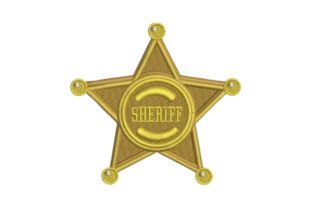
As an embroidery designer who’s prepped over 200 craft fair booths—from Portland bazaars to Nashville maker markets—I opened the Sheriff Badge file with one question: “Will this stop someone mid-aisle?” The answer is yes. It reads bold and friendly—not stern or cartoonish—landing squarely in that sweet spot between western charm and kid-friendly cool. The phrase “For all the little sheriffs out there” tells me this design leans into lighthearted authority, not law enforcement realism. That’s smart positioning: it invites smiles, not scrutiny. For Cowboy category buyers, it’s nostalgic without being kitschy; for embroidery business owners, it’s a versatile anchor that bridges kids’ apparel, adult novelty wear, and rustic home goods.
Where Sheriff Badge Shines on Craft Fair Products
This machine embroidery design thrives where personality meets utility. On a natural canvas tote bag? Perfect—centered above the pocket, it reads clearly from six feet away and adds instant character without overwhelming the fabric. As apron embroidery? Ideal on the chest pocket or lower left corner—it gives handmade kitchen gear a touch of playful professionalism. For tea towel embroidery, place it near the top hem: the clean lines hold up beautifully against textured cotton, and the badge shape frames well beside handwritten recipe prints or vintage-style flour sack motifs.
As an embroidered patch, Sheriff Badge is a standout small shop product. Iron-on or sew-on versions sell fast at craft fairs—especially when pinned to denim jackets or displayed on corkboard samples. On caps? It works best on structured front panels (not curved bill surfaces), where stitch definition stays crisp. Small fabric pouches and pillow covers benefit most when Sheriff Badge is sized 3–4 inches wide: large enough to read, small enough to preserve delicate proportions. And for giftable handmade items—think mini market bags or linen gift tags—it becomes a subtle signature, elevating perceived value without shouting.
What Makes It Sell Online—and In-Person
Etsy sellers and digital embroidery file providers will appreciate how cleanly Sheriff Badge photographs. Its balanced negative space, strong outer border, and centered typography translate well in printable mockups and flat-lay booth displays. No complex shading or gradients means fewer lighting headaches in product photos. It also scales predictably: test it at 2.5”, 3.5”, and 4.5”—you’ll find clarity holds across sizes, making it ideal for batch production. That repeatability matters when you’re stitching 30+ tote bags before Saturday morning setup.
Visually, Sheriff Badge strengthens booth cohesion. Pair it with gingham, chambray, or unbleached linen, and it anchors a western-modern aesthetic without leaning too hard into cowboy cliché. Customers engage quickly—especially parents, teachers, and gift shoppers—because it triggers warm, familiar associations (think school spirit, summer camp, or backyard play). It doesn’t require explanation. That’s rare. Most embroidery files need context; this one *is* the context.
Careful-Use Notes Every Designer Should Check
- Dense stitch areas: The starburst or shield outline may run high stitch density—confirm thread tension on medium-weight twill or duck cloth before mass production.
- Tiny details: If the design includes engraved-style lettering (“U.S.” or “Sheriff”) inside the badge, test readability below 3”. Fine serifs can blur on textured tea towels or thick canvas.
- Dark fabric contrast: This design relies on clear silhouette. On charcoal or navy, use bright white or metallic silver thread—not ecru—to maintain impact.
- Curved surfaces: Avoid placing Sheriff Badge near the seam or crown curve of unstructured caps. Distortion risks softening edges and muddying the badge shape.
- Small size limitations: Below 2”, the central emblem loses distinction. Reserve sub-2” sizing strictly for patches meant to be viewed up close—not as standalone tote bag designs.
Production Tips from the Hoop Line
Before cutting your first fabric piece, run these checks:
- Test the embroidery file on scrap fabric matching your final product—especially if using terry cloth, quilted cotton, or stiffened denim.
- Compare thread colors across three fabric bases: light, medium, and dark. A single gold thread may pop on ivory but vanish on khaki.
- Review spacing between elements—does the outer ring breathe comfortably around the text? Tight spacing increases risk of skipped stitches on uneven surfaces.
- Confirm hoop size compatibility. If your largest hoop is 5x7”, verify the widest version of Sheriff Badge fits with ¼” margin.
- Inspect stitch density in the badge border versus inner text. High-density borders may require cutaway stabilizer on lightweight fabrics; tear-away works fine for medium-weight aprons or tea towels.
- Create at least one real mockup—not just a digital preview. Drape it on a tote, pin it to a cap, hold it against a pillow cover. See how light hits the raised stitches.
- Compare fabric color swatches side-by-side. A cream badge on oatmeal linen reads warm and artisanal; the same on beige polyester reads flat and generic.
- Verify commercial licensing status before selling finished products. Since the description states “This machine embroidery design comes with multiple embroidery file for…”, confirm whether those files include commercial use rights—or if separate licensing applies.
Final Verdict: A Reliable, Repeatable Craft Fair Workhorse
Sheriff Badge isn’t flashy—but it’s dependable. It delivers immediate recognition, supports strong visual storytelling, and adapts seamlessly across product categories without diluting its voice. For the Etsy seller juggling 12 digital embroidery file listings, it’s a low-risk, high-return addition. For the boutique maker stitching custom aprons for local bakeries, it adds memorable flair without sacrificing sophistication. And for the weekend craft fair vendor racing to finish 40 tote bags by Friday night? It’s the kind of design that stitches cleanly, photographs honestly, and sells because it feels both handmade and intentional.
In a crowded market of cacti, mustangs, and horseshoes, Sheriff Badge stands out—not by shouting, but by wearing its confidence quietly, star-shaped and sincere.