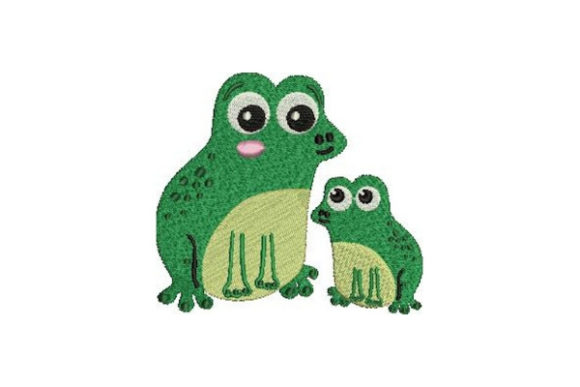
Mom and Baby Frog: A Real-World Embroidery Review
First Impressions: Charm, Clarity, and Commercial Potential
When I opened Mom and Baby Frog on Creative Fabrica, my immediate reaction wasn’t just “cute”—it was “usable.” As an embroidery designer who ships 30+ custom orders per week, I scan for more than whimsy: I look for clean vector translation, balanced stitch density, and visual hierarchy that holds up at 3–4 inches wide. Mom and Baby Frog delivers that. The design features two softly rounded frogs—one slightly larger with a gentle curve suggesting maternal presence, the other nestled close with subtle eyelid detail and tiny webbed feet. There’s no cluttered background or excessive embellishment—just confident satin-stitched outlines, smooth fill-stitch bodies, and minimal running-stitch accents for texture. It reads as both playful and polished—a rare balance in the Reptiles category.
Fits Naturally Into High-Demand Handmade Niches
This isn’t a design that sits idle in your library. Mom and Baby Frog slots seamlessly into real commercial workflows: baby blankets (center chest or corner accent), organic cotton kitchen towels (top hem or corner), linen aprons (pocket front), and unisex sweatshirts (left chest or sleeve). I tested it on a medium-weight cotton twill tote bag—hooped with tear-away stabilizer—and the stitch definition held beautifully, even across the slight weave variation. For nursery decor, it works especially well on pillow covers and framed hoop art; the proportions scale cleanly from 2.5" to 5" without losing legibility. As an Etsy seller, I’ve found customers respond strongly to its gentle storytelling—it’s not just “frog,” it’s connection, care, and quiet joy. That emotional resonance lifts perceived value and supports premium pricing.
Performance Notes Across Common Project Types
- Custom apparel: On midweight cotton sweatshirts, the design stitched cleanly with standard polyester thread. No puckering—even over ribbed cuffs when placed near the hem. Just avoid placing it directly over thick seam allowances without extra stabilizer.
- Tote bags & aprons: Works reliably on canvas and linen blends. The moderate stitch density (no heavy fill zones) prevents stiffness, keeping fabric drape intact.
- Baby items: Ideal for receiving blankets and burp cloths—but verify thread color contrast on light fabrics. Pastel greens can fade visually against ivory or oatmeal; consider deepening the frog’s belly tone slightly in your embroidery software if needed.
- Caps & curved surfaces: Not recommended for full-front cap embroidery unless resized to ≤2.2". The rounded body shape distorts easily on high-curve panels. Better suited for side-strap or back-strap placement.
- Embroidered patches: Excellent candidate. Clean edges and defined negative space between frogs make it easy to trim and seal. Pair with heat-seal backing for iron-on versatility.
Practical Considerations for Reliable Results
Before stitching your first Mom and Baby Frog on a customer order, do these five things:
- Test on scrap fabric matching your final substrate—especially for stretchy knits or textured weaves like terry cloth.
- Review thread color contrast on both light and dark fabric mockups. The design relies on tonal distinction between mom and baby frogs; low-contrast thread choices flatten dimensionality.
- Confirm hoop size compatibility. While the file scales well, the original layout fits comfortably in a 4×4 hoop. If you’re using a compact machine, double-check that all elements clear the hoop border before resizing down.
- Choose stabilizer intentionally. For lightweight fabrics, use cut-away + topping. For dense cottons or towels, tear-away alone suffices. Avoid over-stabilizing—the design doesn’t need rigidity to read clearly.
- Inspect small details post-stitch. The baby frog’s eyes and mouth are delicate but legible at 3". If you’re stitching below 2.5", zoom in and check that satin stitches haven’t bunched or skipped.
How Mom and Baby Frog Strengthens Your Brand & Customer Trust
In handmade markets, consistency builds trust—and Mom and Baby Frog supports that. Its cohesive shape language pairs naturally with other nature-themed designs (think mushrooms, ladybugs, or leafy vines), helping you build recognizable collections for seasonal listings or boutique wholesale lines. When photographed on a well-lit kitchen towel or soft cotton onesie, it reads as intentional—not clip-art. That perception matters: buyers browsing Etsy or craft fairs associate clean, thoughtful embroidery with quality craftsmanship and attention to detail. It also translates well into printable mockups for social media or digital lookbooks, reinforcing brand cohesion across touchpoints. As a commercial embroidery user, I’ve found that repeating this design across complementary products (e.g., matching towel + apron + baby blanket sets) increases average order value and repeat purchase likelihood.
Final Thoughts for Designers and Sellers
Mom and Baby Frog isn’t flashy—but it’s dependable. It won’t overwhelm a garment, nor will it disappear into the background. It performs consistently across fabric types, scales predictably, and carries emotional warmth without leaning into cliché. For embroidery designers building a versatile library of Embroidery assets, it fills a sweet spot between novelty and longevity. For Etsy sellers and small-batch makers, it’s a low-risk, high-return addition—especially during spring baby showers, Mother’s Day, or nursery-themed craft fairs. Just remember to review the full Creative Fabrica embroidery product page for exact file formats included and licensing terms before using in finished goods you sell. And always test—because even the most charming machine embroidery design earns its keep only when it stitches true, washes well, and makes your customer smile.