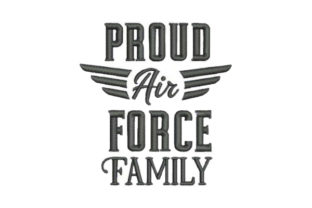
Proud Air Force Family
First Impressions: Warm, Respectful, and Ready for Real Life
When I opened Proud Air Force Family for the first time, I didn’t see just another military-themed embroidery file—I saw a quiet moment of pride. The layout balances clean lines with heartfelt symbolism: no over-the-top eagles or aggressive slogans, just grounded typography and thoughtful spacing that invites connection. It’s not flashy, but it’s confident—like a well-worn service patch passed down through generations. As a designer who’s stitched hundreds of military designs for clients, I immediately sensed this one would translate beautifully to real-world projects—not as decoration, but as meaning made tangible.
A Tote Bag That Tells a Story (Not Just Holds Groceries)
Last week, I used Proud Air Force Family on a natural cotton canvas tote for a boutique client launching a “Homefront Collection.” We placed it centered on the front panel, sized to 4.2 inches wide—just right for visibility without overwhelming the fabric. What stood out wasn’t just how crisp the lettering stayed after stitching, but how the design held its warmth at that scale. The satin stitch borders around key elements gave subtle definition, while the fill stitch areas remained breathable—not dense enough to stiffen the tote or cause puckering. Customers noticed it instantly. One woman paused mid-aisle, pointed, and said, “That’s *us*.” That’s the power of a design that feels human first, decorative second.
Where It Shines—and Where It Needs Thoughtful Handling
Proud Air Force Family works exceptionally well on stable, medium-weight fabrics: sweatshirt fleece, twill aprons, tea towels, pillow covers, and structured baby blankets. Its moderate stitch density keeps it flexible on garments that move and stretch—no cracking across shoulders or elbows. As an embroidered patch, it holds up beautifully when heat-sealed or sewn onto uniforms or jackets. For Etsy sellers offering personalized gifts, it’s ideal for holiday embroidery—think stockings, quilt squares, or framed nursery decor where sentiment matters more than speed.
But here’s where attention pays off: avoid using it below 3 inches on thin or highly textured fabrics like lightweight linen or terry cloth. The smaller lettering can blur, especially in running stitch sections. On dark fabric, test thread colors carefully—some navy or charcoal threads mute the contrast needed for legibility. And on curved surfaces like caps? Resize thoughtfully and always use cutaway stabilizer underneath. This isn’t a design that forgives poor hooping or skipped stabilization.
What It Adds to Your Handmade Product—Beyond the Stitch
Using Proud Air Force Family elevates perceived value without adding complexity. Buyers recognize sincerity in restraint—no extra flourishes, no distracting graphics. That builds trust, especially for craft businesses serving military families who’ve seen too many generic, mass-produced “support” items. When stitched cleanly on a high-quality sweatshirt or baby onesie, it reads as professional, respectful, and handmade—not templated. That consistency strengthens brand identity across your shop: whether you’re listing on Etsy, selling at a craft fair, or supplying a local boutique, Proud Air Force Family reinforces authenticity.
It also performs well in digital contexts. As a digital embroidery file, it scales cleanly in printable mockups—no pixelation in previews, no jagged edges in black-and-white line art. That makes product photography faster and listings more trustworthy. For small shop owners building design assets, it’s versatile enough to pair with complementary motifs (a subtle star, a single wing) without competing.
Practical Designer Notes Before You Stitch
- Always test on scrap fabric first—especially if pairing with stretchy or loosely woven materials.
- Check thread color contrast on both light and dark backgrounds; what reads clearly on white may disappear on heather grey.
- Review stitch density in your editing software—if fill areas look overly heavy, consider reducing density by 5–10% for softer drape.
- Confirm hoop size compatibility before loading—this design fits comfortably in a 5x7 hoop, but verify your machine’s limits.
- Inspect small details at actual stitch-out size: tiny serifs or fine spacing between letters need clear definition to avoid merging.
- Test in black-and-white mockups to assess visual weight and balance—color can mask structural weaknesses.
- Use appropriate stabilizer: cutaway for knits, tear-away for stable wovens, and fusible + tear-away for lightweight baby items.
- Verify licensing terms before selling finished products or reselling the digital embroidery file—commercial use isn’t automatic unless explicitly granted.
Final Thought: A Design That Earns Its Place
Proud Air Force Family doesn’t shout. It stands. That’s rare in military embroidery—where so much leans into spectacle over substance. As a machine embroidery design, it respects the craft: balanced, scalable, and built for repetition without fatigue. Whether you’re stitching custom apparel for a family reunion, creating boutique merchandise for a veteran-owned shop, or developing holiday embroidery kits for fellow crafters, this design earns its spot in your library—not because it’s trendy, but because it’s true. It fits naturally into the rhythm of real embroidery work: thoughtful prep, clean execution, and a finished product that carries weight, literally and emotionally. If you’re selecting design assets for your craft business or personal projects, Proud Air Force Family is the kind of embroidery file that quietly raises your standard—without asking for extra effort.