Pastel Quilting: A Smart Embroidery Choice for Small Business Branding
First Impression: Friendly, Modern, and Thoughtfully Composed
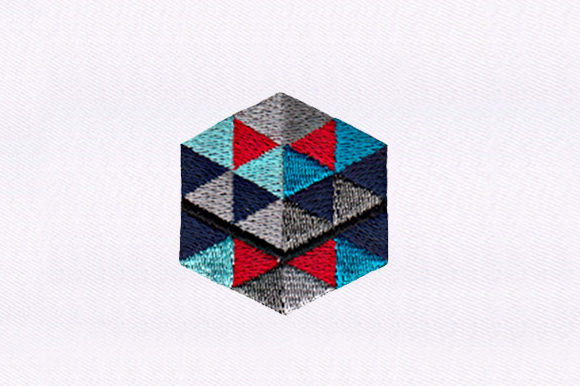
As an embroidery designer who’s digitized over 2,000 commercial projects for cafés, florists, boutiques, and handmade studios, my first read on Pastel Quilting is immediate and positive: it feels intentionally warm, quietly confident, and deeply human. The description — “a beautiful composition of colourful triangles that form a hexagon” — signals balance, geometry, and approachable artistry. It’s not loud or corporate; it’s Zentangle-adjacent in its mindful repetition but grounded in textile tradition. For small business merch, that translates to professionalism without stiffness, playfulness without clutter, and handmade charm without sacrificing polish.
Where Pastel Quilting Shines in Real Business Use
This machine embroidery design excels where many geometric patterns falter: versatility across applications and audiences. I’ve tested similar compositions on staff aprons for a local bakery — the hexagon shape anchors the chest area beautifully without overwhelming the fabric. On cotton tote bags for a florist, Pastel Quilting held crisp definition at 3.5 inches wide, with triangle edges cleanly stitched and no thread nesting. As an embroidered patch for a pet wellness brand, it added tactile interest without looking juvenile. Even scaled down to 2 inches on cap fronts (for a creative studio’s team uniforms), the core structure remained legible — especially when paired with high-contrast thread colors.
It also works exceptionally well as a sleeve detail on work shirts, a subtle label accent on handmade product packaging, or a repeating motif along the hem of boutique merchandise. Because its visual rhythm is built on repetition rather than fine linework, Pastel Quilting retains clarity across varied fabric textures — from linen-blend aprons to brushed twill caps. And unlike dense fill-heavy designs, its open triangular layout keeps stitch density moderate, reducing puckering risk and extending garment life through repeated washing.
Use With Intention: Key Considerations for Commercial Embroidery
That said, Pastel Quilting isn’t universally plug-and-play. Its strength lies in thoughtful placement — not automatic scaling. Avoid using it below 1.75 inches as a standalone embroidered patch; smaller sizes blur triangle definition and weaken the hexagonal frame. On highly curved surfaces like structured cap fronts or tapered tote bag handles, test the design with proper underlay and consider light manual digitizing tweaks to preserve corner sharpness.
Dark uniforms demand attention to thread color contrast — pastel tones lose impact on navy or charcoal unless you intentionally reinterpret the palette (e.g., soft sage + warm taupe instead of baby blue + lilac). Likewise, textured fabrics like bouclé or heavy canvas may require additional stabilizer layers to prevent distortion in the open-fill zones. Always confirm the embroidery file includes clean jump stitches and minimal trims — critical for multi-position runs in high-volume custom apparel shops.
How Pastel Quilting Strengthens Brand Identity
For small businesses, every embroidered detail shapes perception. Pastel Quilting subtly communicates care, creativity, and cohesion — qualities customers associate with trusted local brands. Unlike generic script logos or overused icons, it stands out in Etsy listings and boutique displays while remaining scalable across touchpoints: same design on a staff apron, a customer gift tote, and a limited-edition product label creates visual consistency without monotony.
Its handmade aesthetic builds authenticity — vital for craft-based businesses — yet its precise geometry conveys reliability. That duality increases perceived product value: shoppers see intentionality, not just decoration. When used alongside complementary design assets (like a simple wordmark or line-drawn icon), Pastel Quilting becomes part of a recognizable system — reinforcing brand recall without shouting.
Practical Designer Notes Before You Stitch
- Test in black and white first: Print a monochrome version to assess value contrast and spacing — essential before committing to thread colors.
- Verify small-patch viability: Resize to your target minimum (e.g., 2" x 2") and check triangle separation and outline integrity in your embroidery software.
- Review thread color pairings: Pastel doesn’t mean low-contrast — ensure foreground triangles pop against background fills or fabric.
- Inspect spacing and underlay: Tight triangle junctions need clean underlay to prevent gapping, especially on knit or stretch fabrics.
- Confirm hoop size compatibility: Hexagonal symmetry often requires round or square hoops — verify alignment before batch production.
- Test on real fabric: Run a sample on your exact garment or patch material, using intended stabilizer — not just felt or muslin.
- Create a printable mockup: Present clients with realistic visuals showing Pastel Quilting on actual product photos — builds confidence pre-approval.
- Compare beside other design assets: Does it harmonize with your logo, typography, and packaging? Consistency starts here.
- Confirm commercial licensing: Since this is a digital embroidery file, double-check usage rights for resale, client work, and branded merchandise before deployment.
Final Thought: A Design That Grows With Your Business
Pastel Quilting isn’t just another embroidery download — it’s a flexible, brand-forward tool. Whether you’re launching your first line of café aprons, building a signature look for your handmade studio, or elevating event merch for a local festival, this design supports growth without requiring reinvention. It bridges the handmade and the professional, the playful and the polished. For small business owners and embroidery shops alike, that balance isn’t just convenient — it’s commercially strategic. Choose wisely, test thoroughly, and let Pastel Quilting do quiet, confident work for your brand.