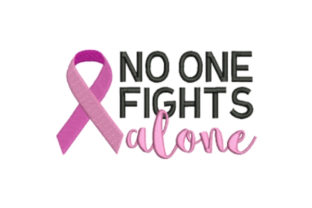
No One Fights Alone
A Professional Embroidery Designer’s Real-World Review for Small Business Use
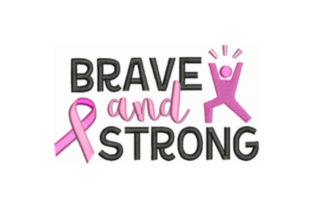
As an embroidery designer who’s developed and tested hundreds of machine embroidery designs for small businesses—from neighborhood bakeries to indie florists and pet wellness brands—I approached No One Fights Alone with both creative curiosity and commercial pragmatism. This isn’t just another inspirational quote stitched onto fabric. It’s a strategic brand asset—especially for businesses aligning with breast cancer awareness—and its effectiveness hinges on how well it translates across real-world applications: embroidered patches, staff aprons, cap fronts, tote bags, product tags, and boutique merchandise.
First Impression: Warm, Resonant, and Professionally Grounded
No One Fights Alone lands with quiet strength—not loud or flashy, but deeply human. The phrasing avoids cliché while carrying emotional weight, making it ideal for small business merch that values authenticity over trend-chasing. It reads as modern yet timeless, supportive without being clinical, and inclusive without sacrificing clarity. For a café adding embroidered aprons for staff, a handmade jewelry studio branding reusable totes, or a local florist launching a limited-edition “Hope Blooms” collection, this design feels intentional—not decorative filler. It supports a mission while reinforcing brand identity through tone and purpose.
Where No One Fights Alone Excels in Commercial Embroidery
- Embroidered patches: Works beautifully as a sew-on or iron-on patch—ideal for jackets, backpacks, or uniform sleeves. Its balanced word spacing and moderate letter height scale cleanly down to 2.5" wide without losing legibility.
- Staff uniforms & aprons: As chest embroidery on cotton twill aprons or work shirts, it communicates care and community—perfect for healthcare-adjacent shops, wellness studios, or compassionate service brands.
- Cap embroidery: When centered on the front of structured caps (with clean background fabric), it reads clearly at standard cap hoop sizes. Avoid overly curved low-profile caps unless digitized with contour compensation.
- Tote bag design: Stitches crisply on canvas or duck cloth, especially when placed mid-panel or near the bottom hem. Adds meaningful weight to reusable merch without overwhelming the item’s function.
- Product packaging accents: A small version works elegantly on woven labels, hang tags, or stitched-on fabric seals for handmade goods—elevating perceived value and signaling shared values.
- Etsy branding & craft business assets: Integrates seamlessly into printable mockups, digital lookbooks, and social media banners. Paired with soft neutral thread colors (heather gray, oatmeal, deep rose), it reinforces a thoughtful, handmade product aesthetic.
Use With Intention: Key Considerations for Production
While No One Fights Alone is versatile, it demands mindful execution. Its impact weakens if applied without attention to context:
- Avoid ultra-small patch sizes (<2")—fine spacing between letters may collapse or stitch poorly, especially on textured fabrics like fleece or terry cloth.
- Test carefully on dark uniforms—if using light thread, confirm contrast holds after multiple washes; consider matte polyester threads for long-term vibrancy.
- Curved surfaces (like cap fronts or sleeve cuffs) require proper underlay and stabilizer choice—don’t skip cutaway or tear-away backing, even on stable fabrics.
- Frequent-wash items (aprons, staff tees) benefit from moderate stitch density—overly dense fills increase wear risk and stiffness. Confirm the embroidery file isn’t over-digitized before bulk production.
- Thread colors matter more than you think—a muted sage or warm terracotta reads differently than stark white or neon pink. Match your brand palette, not just the cause.
How No One Fights Alone Strengthens Brand Identity & Customer Trust
This machine embroidery design does more than decorate—it signals alignment. When customers see No One Fights Alone stitched onto a bakery’s flour-dusted apron or a pet brand’s leash tag, they register intentionality: this business cares, listens, and stands for something beyond profit. That builds trust faster than any slogan. It also supports visual consistency—whether used as a 1.75" chest logo or a 4" tote bag centerpiece, the phrase remains instantly recognizable. For Etsy sellers and handmade brands, that consistency turns casual browsers into repeat buyers. And because it’s rooted in awareness—not sales—it invites engagement without pressure, making it powerful for event merch, pop-up shops, or community collaborations.
Practical Designer Notes Before You Stitch
- Always test in black and white first—verify letter separation, kerning, and overall balance before committing to thread colors.
- Check scalability—resize the embroidery file to your smallest intended use (e.g., 2" patch) and inspect for stitching artifacts or crowding.
- Review thread color contrast on actual fabric swatches—not just screen previews. Lighting changes everything.
- Inspect spacing and underlay—tight lettering needs extra underlay to prevent puckering on knit or stretchy fabrics.
- Confirm hoop size compatibility—some versions may be optimized for 4x4 hoops, others for larger frames. Know your machine’s limits.
- Test on real fabric + stabilizer combo—what works on denim may fail on linen blend. Always run a sample.
- Create a printable mockup for client approval—especially important for custom apparel orders or wholesale partners.
- Compare beside other design assets—does No One Fights Alone harmonize with your logo, fonts, and existing embroidery file library?
- Verify commercial licensing—since this is intended for small business merch and commercial embroidery, confirm usage rights cover resale, branding, and physical product application.
No One Fights Alone isn’t just a phrase—it’s a quiet commitment, stitched into the fabric of your brand. Used thoughtfully, it strengthens connection, honors purpose, and elevates everyday items into meaningful touchpoints. Whether you’re a solo embroiderer building an Etsy shop or a boutique owner launching awareness-driven merch, this design earns its place—not as decoration, but as dialogue.