I Love Music
A Professional Embroidery Designer’s Review for Small Business Merchandise
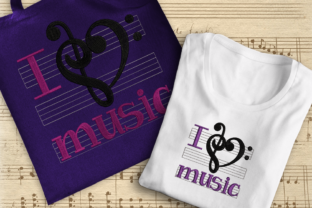
As an embroidery designer who’s developed hundreds of commercial designs for cafés, boutiques, studios, and handmade brands, I approached I Love Music with both enthusiasm and scrutiny. This isn’t just another decorative motif—it’s a potential brand asset. The concept—“I heart music” with the heart formed by interlocking bass and treble clefs—is instantly recognizable, clever, and emotionally resonant. At first glance, it reads as friendly, modern, and authentically musical—not overly technical, not childish, and not so abstract that it loses meaning at small scale. That balance is rare—and valuable—for small business merch.
How I Love Music Performs Across Real Business Applications
In practice, I Love Music shines where personality meets professionalism: on staff aprons for a vinyl café, embroidered patches for a local music school’s tote bags, chest logos for boutique work shirts, or sleeve accents on custom apparel for a creative studio’s team. Its clean silhouette and intentional negative space make it highly adaptable. As an embroidered patch, it holds up beautifully when heat-sealed or sewn onto denim jackets, canvas totes, or linen aprons. On caps, it works best on structured front panels—not curved bill edges—where the clef-heart remains legible and proportionally balanced.
For small business merch, this design adds warmth without sacrificing polish. A florist might pair it with botanical thread colors on kraft tote bags; a pet brand could use it subtly on collar tags or bandana labels; a bakery with a jazz-themed aesthetic could embroider it onto chef hats or counter aprons. Because the phrase is universally understood—and the visual metaphor is precise—it builds brand identity without needing explanation. Customers recognize intent, emotion, and craft in one glance—boosting trust and engagement before a word is spoken.
Where to Use I Love Music Thoughtfully
This design excels—but it’s not universally bulletproof. Its strength lies in clarity, not intricacy. So avoid pushing it into contexts where detail dissolves: patches under 2 inches tall, cap backs with tight curvature, or textured fabrics like heavy terry cloth or bouclé wool. The joined clefs form a delicate heart shape—lovely at 3–4 inches, but prone to “fill-in” or distortion if stitched too densely on low-thread-count cotton or unstable knits.
Also consider thread colors carefully. On dark uniforms (navy chef coats, charcoal work shirts), high-contrast thread—like bright white, metallic silver, or rich burgundy—keeps the heart shape readable. Avoid light pastels on light fabric unless you’re aiming for subtle branding; the design’s charm relies on visibility, not whisper-thin minimalism. And while the phrase is short, the lettering must retain generous spacing—especially between “I” and “heart”—to prevent stitching bleed during high-speed commercial embroidery.
Impact on Brand Identity and Customer Perception
I Love Music does more than decorate—it communicates values. It signals approachability, creativity, and authenticity—qualities small businesses rely on to stand out. When stitched cleanly onto a handmade product or boutique merchandise, it elevates perceived value. Customers don’t just see a logo; they sense intention, care, and shared passion. That emotional resonance strengthens customer loyalty, supports repeat purchases, and makes branded items feel like keepsakes—not throwaways.
Consistency matters, too. If your brand uses I Love Music across aprons, patches, and tote bag designs, it becomes a visual anchor—reinforcing recognition without repetition fatigue. Unlike generic script fonts or overused icons, this design carries narrative weight. It tells a story about love, rhythm, and human connection—making it especially effective for Etsy sellers, crafters, and local studios building community around shared interests.
Practical Embroidery Designer Notes for Production
Before committing to bulk production, here’s what I always do with a design like I Love Music:
- Test it in black and white first. Monochrome reveals spacing issues, stitch density imbalances, and unintended texture shifts—especially in the clef-heart junction.
- Check legibility at your smallest intended patch size. Can you still distinguish the bass from the treble clef? Does the heart shape hold integrity—or collapse into a blob?
- Review thread color contrast on your target fabric. Run samples on actual garment swatches—not just digital mockups—to assess how lightfastness and sheen affect perception.
- Inspect letter spacing and outline definition. Tight kerning or thin outlines can vanish under dense fill stitches or on loosely woven textiles.
- Confirm hoop size compatibility with your commercial embroidery machines—and verify whether the design fits standard cap frames or requires specialty hoops.
- Test stabilizer pairing. Lightweight cutaway works well for stable wovens; tear-away + topping may be needed for knits or textured canvas.
- Create a printable mockup for client approval—showing real-world scale on an apron, tote, or cap—not just isolated vector art.
- Compare it beside other design assets. Does I Love Music harmonize with your existing logo, typography, and color palette—or clash tonally?
- Confirm commercial licensing. Since this is intended for commercial embroidery, ensure your digital embroidery file includes rights for resale, promotional use, and small business distribution.
Remember: a great machine embroidery design isn’t just about aesthetics—it’s about reliability, scalability, and storytelling. I Love Music delivers all three when used intentionally. It’s not filler. It’s functional branding with soul.
Final Thought for Small Business Owners and Embroidery Shops
If you’re curating design assets for a handmade product line, local event merch, or customer-facing staff wear, I Love Music earns its place—not as background decoration, but as a signature touch. It bridges niche appeal (music lovers) with broad emotional resonance (love, joy, expression). Used well, it transforms ordinary items—tote bags, caps, aprons—into memorable brand moments. Just honor its structure, respect its scale limits, and let the heart-shaped clefs speak for you.